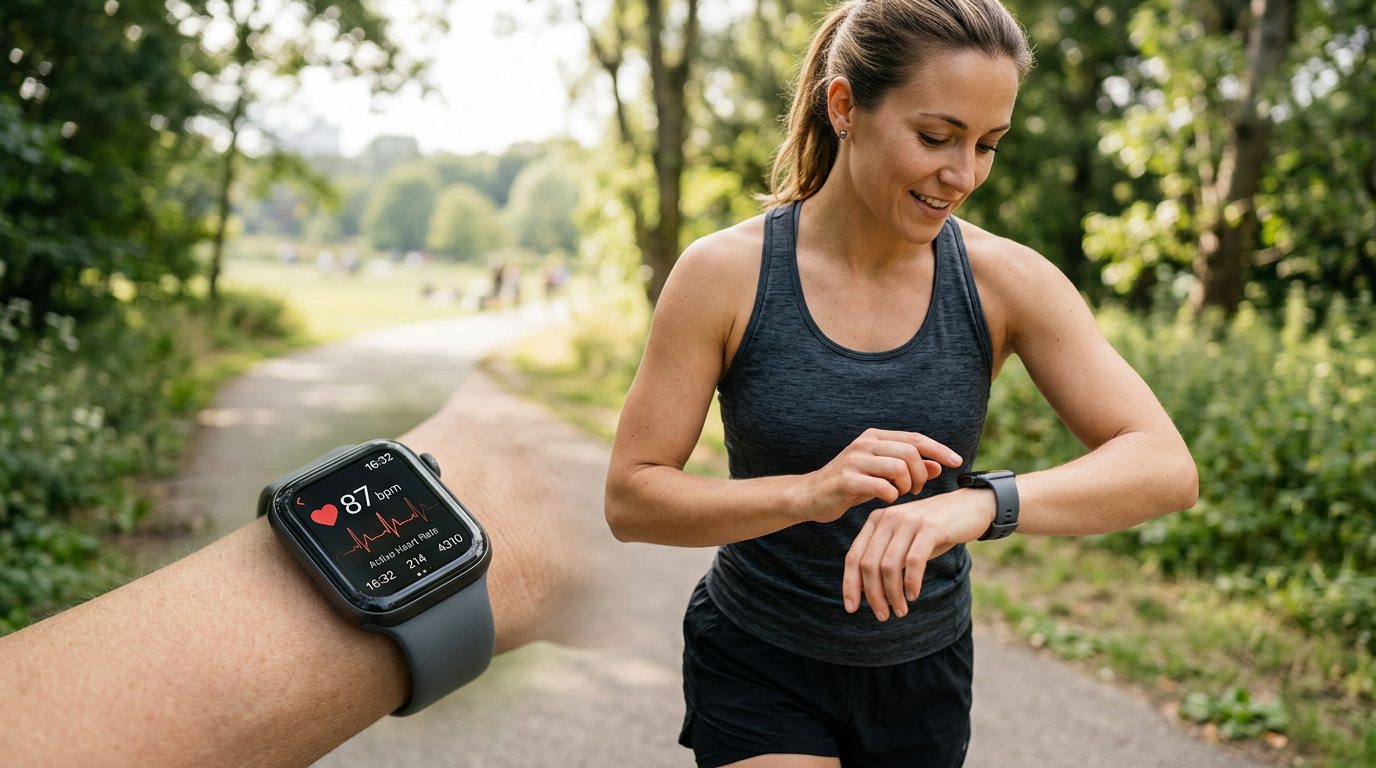
You glance at your wrist after a hard climb and the number reads 188 bpm. Is that real, or is your watch guessing? That is the question behind are smartwatch heart rate monitors accurate, and it deserves a straight answer rather than a marketing slogan.
Quick answer: For most everyday use — resting heart rate, steady runs, sleep tracking — a modern smartwatch is close enough to be useful. Accuracy drops during fast intervals, heavy weightlifting, and cold-weather workouts, where readings can lag or spike. Treat the wrist sensor as a helpful trend tool, not a medical instrument.
This article explains how the sensors work, where they succeed and fail, and how to get better readings from the watch you already own.
What is are smartwatch heart rate monitors accurate?
The phrase sounds awkward, but the question is simple: how close is your watch’s heart rate reading to the truth? Most smartwatches use an optical sensor on the back. It shines green light into your skin and measures how much light bounces back.
Blood absorbs green light differently depending on how much is flowing. As your heart beats, that flow changes, and the sensor reads the rhythm. This method is called photoplethysmography, or PPG. A chest strap works differently: it measures the heart’s electrical signal directly, much like an ECG.
That difference explains most accuracy gaps. Optical sensors read blood flow at the wrist, which is a noisy place to measure. Movement, sweat, skin tone, wrist hair, and even the tightness of the band all affect what the light sees.
How accurate is "accurate enough"?
Studies that compare smartwatches with ECG-grade chest straps typically find strong agreement at rest and during steady exercise. Errors grow during sudden changes in intensity. A watch may take 10 to 30 seconds to catch up when you sprint, because it averages readings over a short window to smooth out noise.
Some watches now offer a single-lead ECG feature approved for detecting irregular rhythms such as atrial fibrillation. That is a different function from continuous heart rate tracking. An ECG reading taken with your fingers on the crown is not the same as the green-light sensor running all day.
A smartwatch can flag a possible irregular rhythm, but it cannot diagnose a heart condition. Any concerning reading deserves a conversation with a doctor.
What the numbers actually tell you
Your watch reports beats per minute, but the useful information is the pattern. A resting heart rate that drifts up by five to seven beats over a few weeks can signal poor sleep, stress, illness, or overtraining. A heart rate that climbs normally during a run and settles quickly afterward suggests good fitness.
The trend matters more than any single reading. Consumer sensors are consistent enough to show direction even when individual values are slightly off.
Why are smartwatch heart rate monitors accurate matters
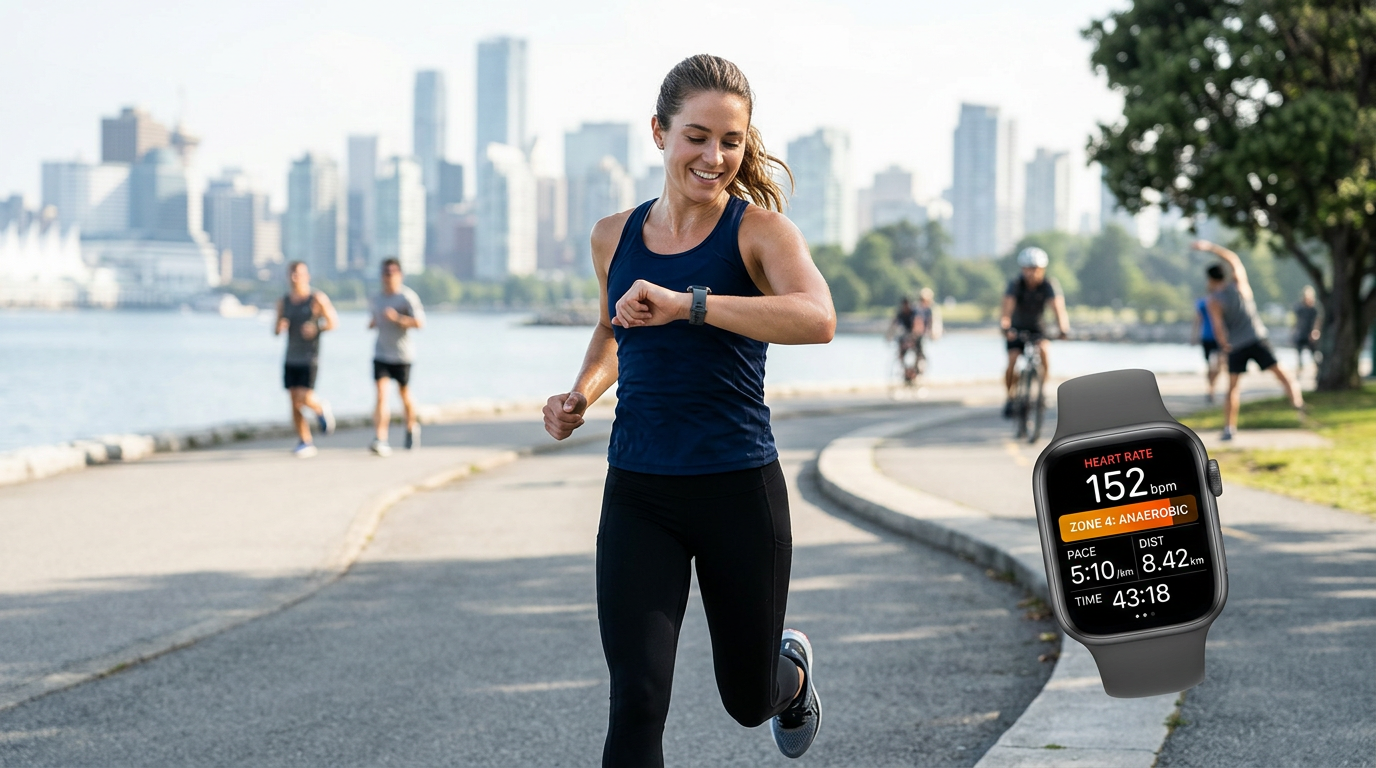
Accuracy changes what you can safely do with the data. If your watch reads 10 bpm low during intervals, your training zones shift, and you may run easier than planned. If it reads high, you might push harder than your body is ready for.
Heart rate zones are the most common example. Many runners train by keeping effort in zone 2, roughly 60 to 70 percent of maximum heart rate. A small error is tolerable there. A larger one, especially during fast efforts, can put you in the wrong zone without you noticing.
Pacing is where errors bite hardest. A reading that lags by 20 seconds can convince you that a climb feels easier than it is, so you start too fast and fade later. Runners who know their sensor’s delay learn to trust breathing and perceived effort for the first minute of any hard effort, then let the numbers catch up.
Health signals worth watching
Resting heart rate is one of the most useful numbers a wearable collects. It reflects how hard your heart works when you are calm. A rising trend can appear before you feel sick, and many people notice it during illness or after poor sleep.
Afib detection adds another layer. Wearables that alert users to irregular rhythms can prompt earlier medical checks. That value depends on the alert being reliable, which is why regulators review these features carefully rather than treating them as ordinary app updates.
Where inaccurate readings cost you
- Training plans built on precise zones lose their edge when the data drifts.
- Sleep and recovery scores fed by heart rate variability can mislead when readings are noisy.
- Peace of mind suffers when a random spike makes you worry about a heart that is perfectly fine.
Accuracy matters most when you act on the number. For casual step counting and general awareness, small errors rarely change your day.
A watch that is consistently 5 bpm high is easier to work with than one that jumps around. Consistency beats absolute precision for training decisions.
Best practices
You can improve readings without buying anything new. Most accuracy problems come from fit and setup, not from the sensor itself.
Charge the watch fully before long sessions; some devices reduce sensor sampling rate in low-power mode. Keep the sensor window clean, since sweat residue and sunscreen film scatter light. On very hairy wrists, a snug fit or a move to the upper forearm can make a visible difference within a single workout.
Get the fit right
Wear the watch one finger-width above your wrist bone. The band should sit snug against your skin without pinching. If you can slide two fingers under it, it is too loose, and light will leak in during movement.
Tighten the band by one notch before a run or a gym session. Loosen it afterward for comfort. A loose watch is the single most common cause of odd readings during exercise.
Choose the right activity mode
Start a workout on the watch rather than relying on automatic detection. Dedicated modes sample heart rate more often, which reduces lag during intervals. For steady cardio, the difference is small. For sprint work, it is noticeable.
If your watch supports a chest strap, pair one for serious interval sessions or races. Chest straps measure electrical activity and hold up well under heavy movement. Many watches accept standard Bluetooth straps from third-party brands.
Interpret with context
Check whether a surprising number makes sense. A reading of 180 bpm while sitting at your desk is almost certainly an error, often caused by a loose band or a cold hand. A reading of 60 bpm during a hard run usually means the sensor lost contact.
Take a manual pulse occasionally to sanity-check your watch. Count beats for 15 seconds and multiply by four. This takes ten seconds and tells you whether your device is in the right range.
Warm up your hands before outdoor workouts in cold weather. Cold skin reduces blood flow at the wrist, and sensors struggle when flow drops.
Common mistakes to avoid
Plenty of people blame the watch when the problem is how they use it. These missteps show up again and again.
Wearing the watch loose during workouts. A band that feels fine at your desk will shift during a run. Tighten it before you start moving, then check the reading mid-session to confirm it looks sensible.
Ignoring lag during interval training. Optical sensors average readings over time, so they trail reality when intensity changes fast. Do not expect your watch to capture a 30-second sprint perfectly. Judge intervals by feel and use the heart rate graph as a rough guide.
Treating one high reading as a diagnosis. A single spike means little. Look for patterns across days and weeks before drawing conclusions. One strange number after a bad night’s sleep is not a medical event.
Comparing readings across different devices. Two watches worn on different wrists can disagree by several beats, especially during movement. Pick one device as your reference and track trends within it.
Skipping the skin-contact check. Tattoos, dry skin, and arm hair can block the sensor’s light. Moisturizing dry skin or shifting the watch slightly higher can help. People with dense tattoos on the wrist sometimes get poor readings no matter what they try.
Expecting clean data from a watch worn over a sleeve. Fabric between the sensor and your skin blocks the light entirely, so winter runs with the watch pushed up over a jacket sleeve produce gaps or wildly low numbers. Roll the cuff back or wear the watch underneath.
Forgetting that wrist position changes the reading. Bending your hand back sharply, gripping a barbell, or pressing your palm against a keyboard can compress the blood vessels the sensor is watching. Readings can dip or stall during those moments even when your heart rate is steady.
Never use a smartwatch reading to override symptoms. Chest pain, dizziness, or unusual shortness of breath need medical attention, whatever your wrist says.
FAQ
How accurate are smartwatch heart rate monitors during exercise?
They are close to chest straps at rest and during steady activities like walking, cycling, or jogging. Accuracy drops during fast intervals, heavy lifting, and sports with sharp arm movements. Expect a delay of several seconds when your effort changes quickly.
Can my watch’s heart rate reading be wrong by a lot?
Yes, occasionally. Loose fit, cold skin, and motion can produce spikes that are far off. A single wild number is usually a sensor error rather than a heart problem. Check the band and take a manual pulse to confirm.
Do chest straps give better readings than wrist sensors?
For high-intensity and interval training, yes. Chest straps measure the heart’s electrical signal and are less affected by movement. Many runners pair a strap with their watch for hard sessions and rely on the wrist sensor the rest of the time.
Are smartwatch heart rate monitors accurate enough for training zones?
For steady endurance work, generally yes. For precise zone work at high intensity, use a chest strap or judge effort by breathing and perceived exertion. Small errors matter less in easy zones than in hard ones.
Should I trust an irregular rhythm alert from my watch?
Take it seriously enough to get checked, but do not panic. These features are designed to prompt a medical conversation, not to replace one. Your doctor can run proper tests that a wrist device cannot.
Conclusion
Wrist-based heart rate tracking has become genuinely useful. The sensors handle rest, sleep, and steady cardio well, and the trends they reveal are often more valuable than any single reading. Fast intervals, cold weather, and loose bands remain weak spots, and no smartwatch replaces a medical assessment.
The practical move is simple: snug the band before workouts, start a dedicated activity mode, and compare your watch against a manual pulse every so often. If you train seriously by heart rate, add a chest strap for hard sessions.
Start this week by checking your resting heart rate trend and testing your band fit during one workout. Those two habits will teach you more about your device than any spec sheet, and they show exactly where are smartwatch heart rate monitors accurate matters in your own routine.